Latter-day Stats
Statistics, research, and creator data on the Latter-day Saint community.
A public hub tracking LDS YouTube creators, academic studies, survey datasets, and community trends — sourced from public data and refreshed regularly.
Channels tracked
328
Combined subscribers
16.7M
Studies
73
Graphics
60
What's here
Channels
Latter-day Saint YouTube creators, with subscriber, view and video counts refreshed regularly.
328 creators trackedOpenStudies
Academic studies and research on the Latter-day Saint community, searchable by topic.
73 studiesOpenData Explorer
Public survey and statistical datasets, with quizzes, charts and write-ups for each.
44 datasets · 60 graphicsOpenMap Explorer
A world map of membership, congregations, stakes, missions and temples by country.
Membership by countryOpenUse with AI
Connect the data to Claude or ChatGPT and ask questions in plain language. Free, no account.
Claude · ChatGPTOpenExegesis Hall of Shame
Funny examples of poor scripture exegesis I have come across.
1 entryOpen
Top statistics
Leaders across the tracker
Subscribers
Top channels by subscribers
Largest audience
2.6M
- 1The Church of Jesus Christ of Latter-day SaintsChurch - subscribers2.6M
- 2The Tabernacle Choir at Temple SquareMusic - subscribers1.1M
- 3Church of Jesus Christ | Come Unto Christ Church - subscribers1M
- 4BYU Vocal PointMusic - subscribers816K
- 5General Conference of The Church of Jesus ChristChurch - subscribers758K
From the graphics gallery
Browse the gallery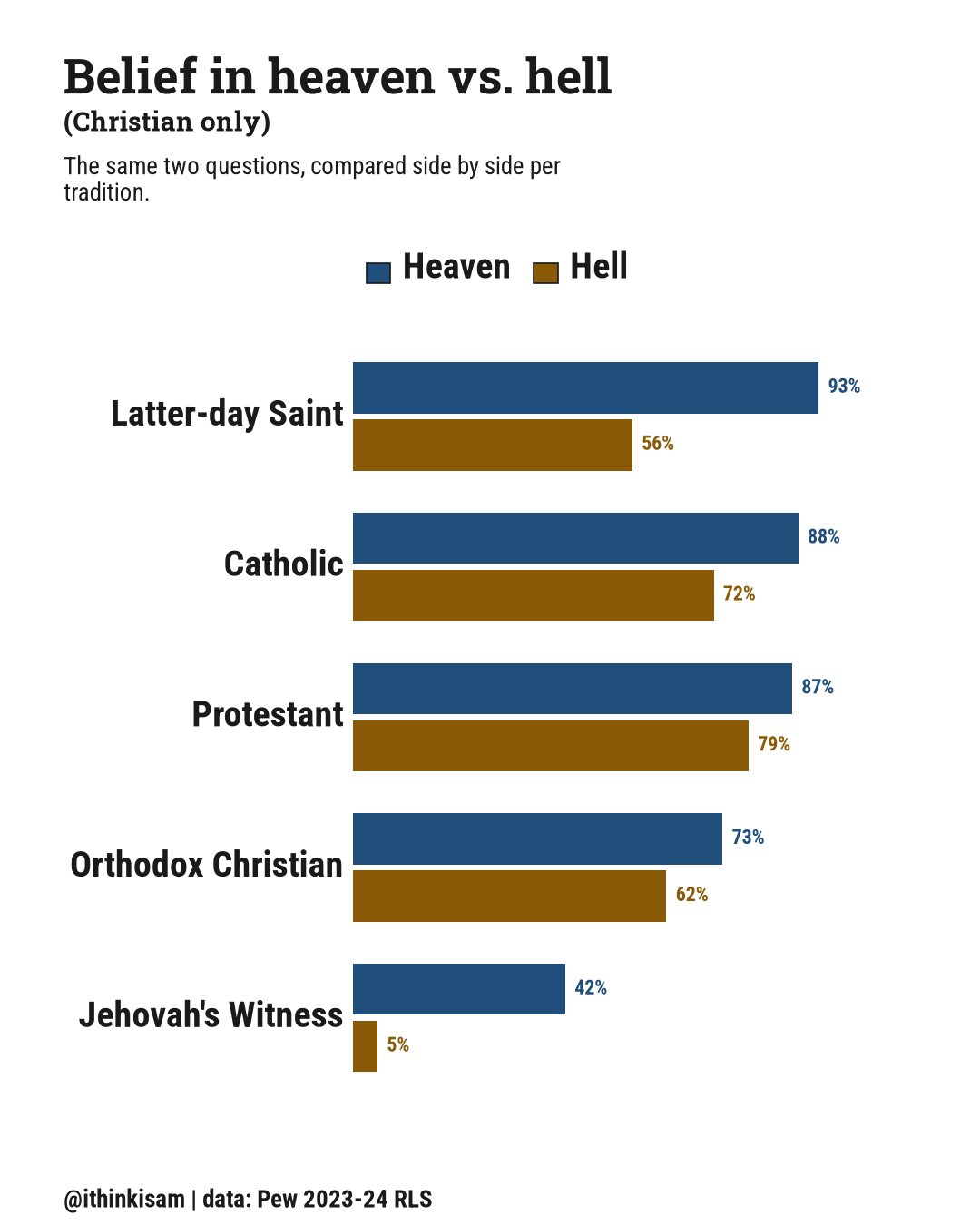
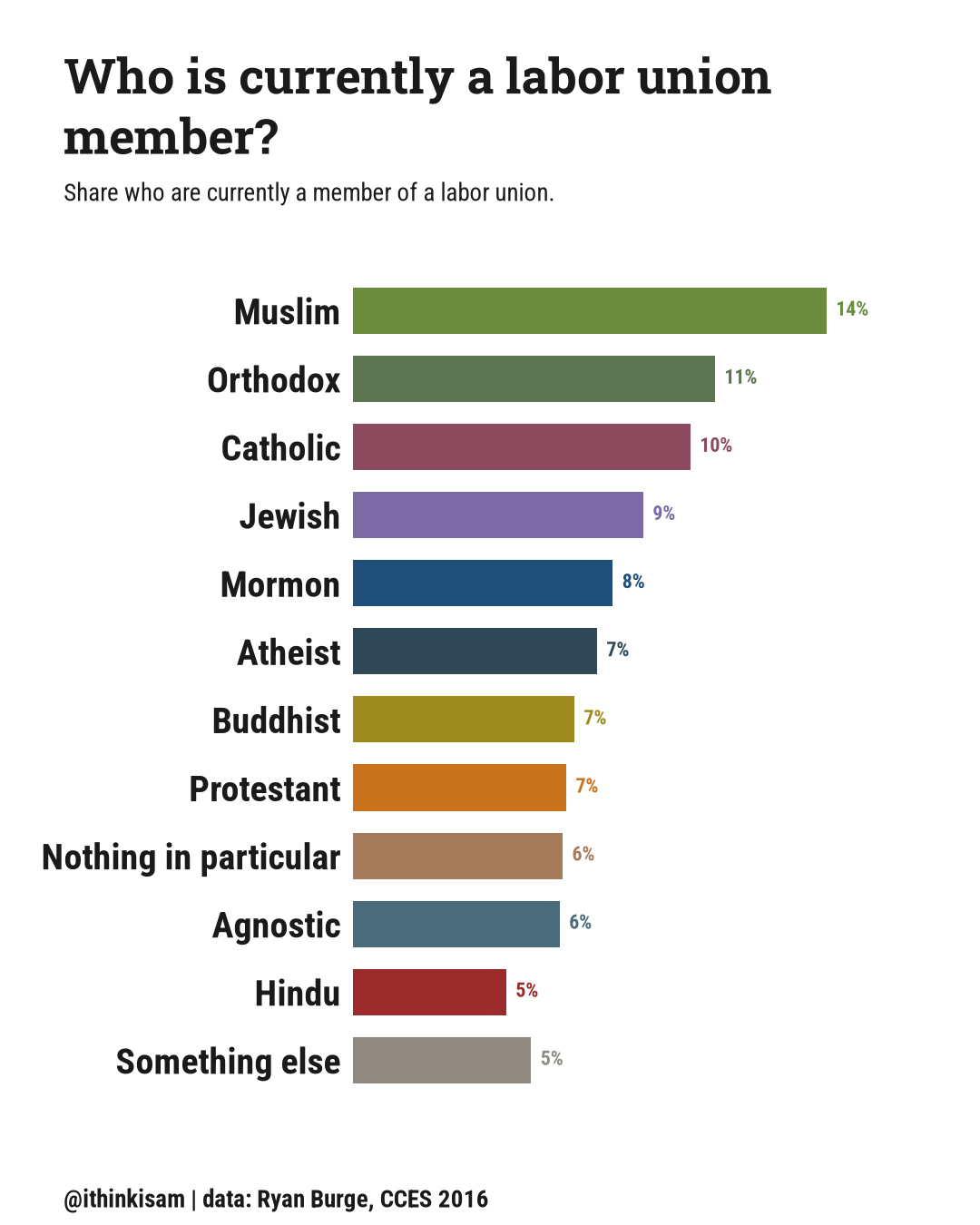
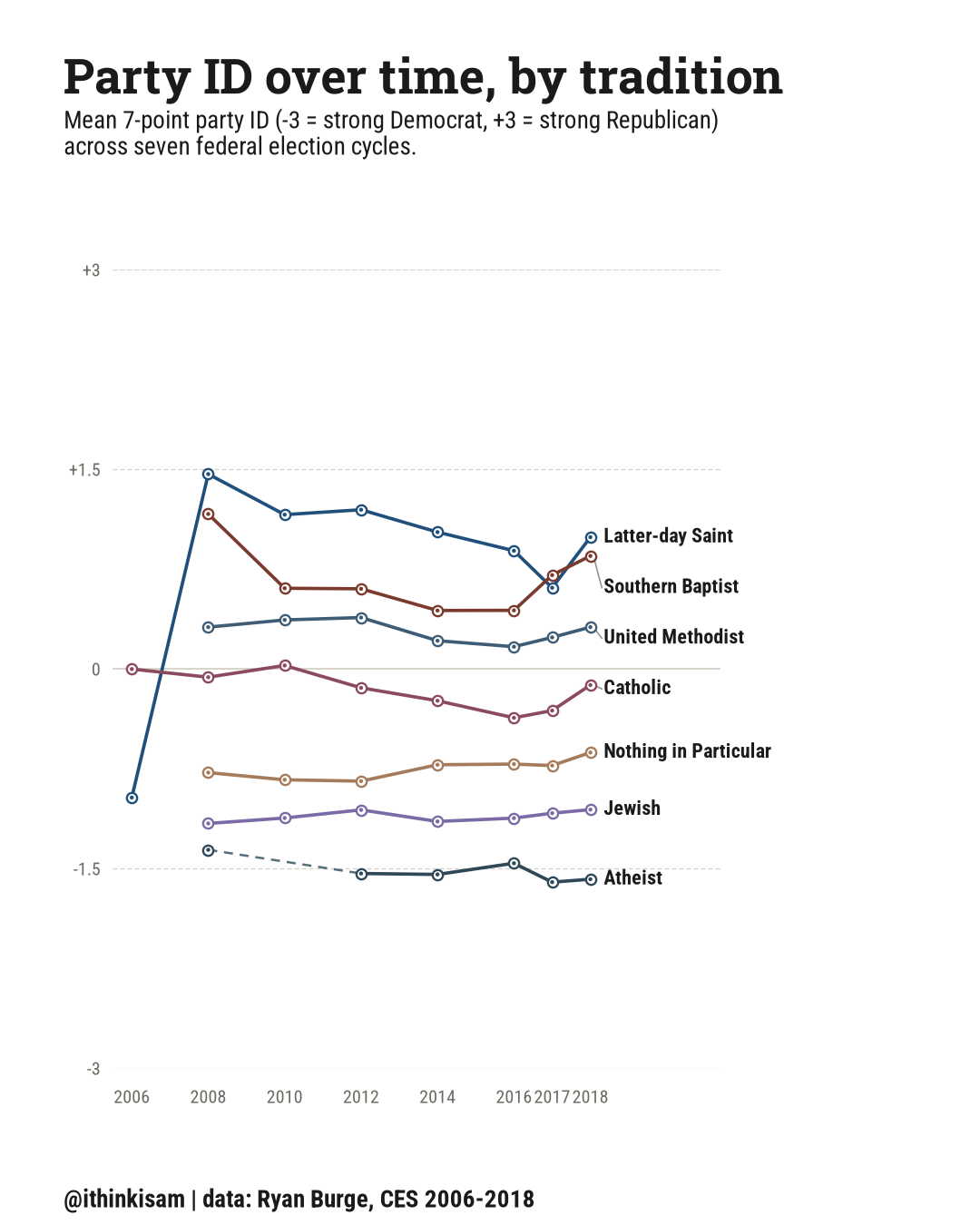
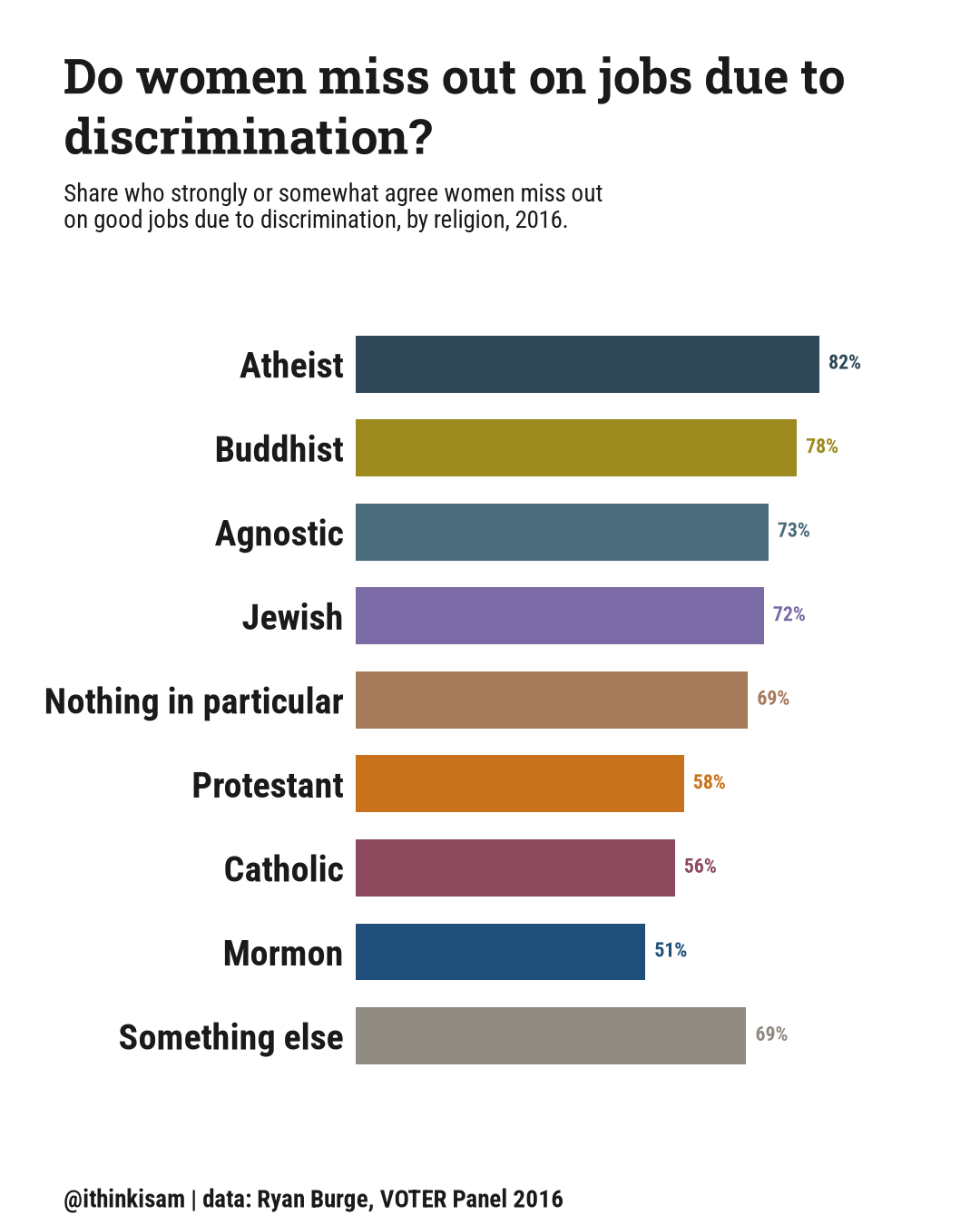
From the research library
View all →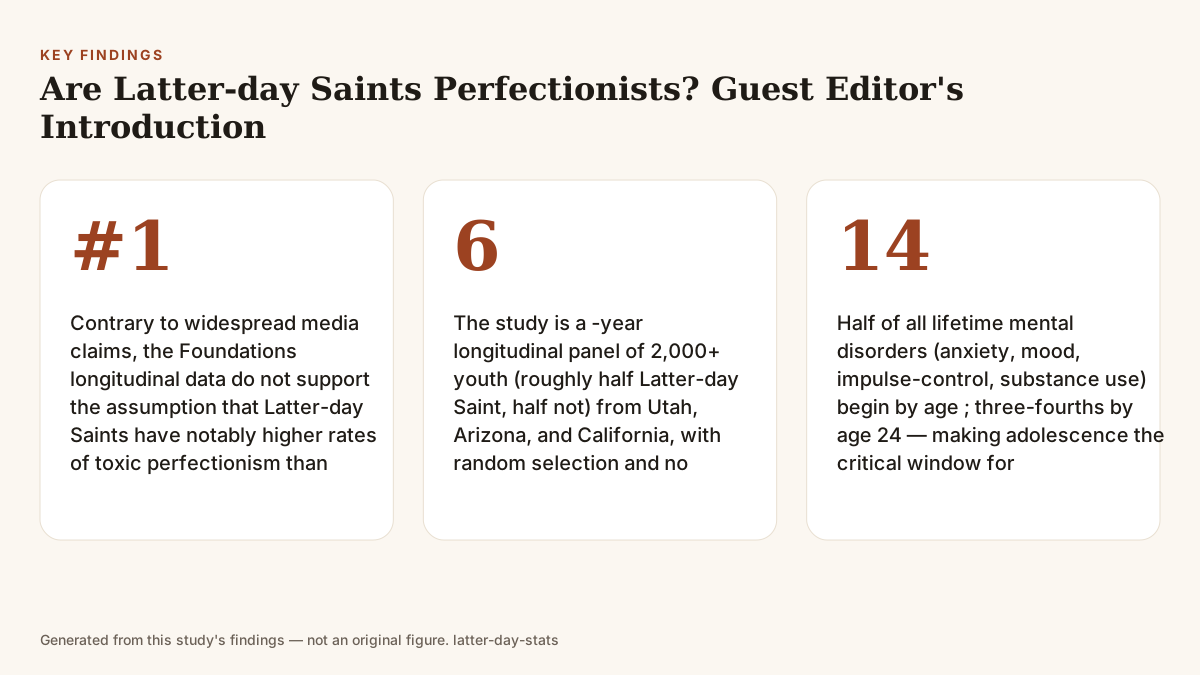 AI · not from studyStudy2024PerfectionismMental Health
Are Latter-day Saints Perfectionists? Guest Editor's Introduction
W. Justin Dyer
Introduction to a special issue on perfectionism among Latter-day Saints, reporting key findings from the Foundations longitudinal study — a six-year panel of 2,000+ youth (approximately half Latter-day Saint, half not) from Utah, Arizona, and California. Dyer challenges the widespread assumption that Latter-day Saints are a "notoriously perfectionistic population," presenting data showing the narrative does not match the evidence. Introduces the concept of healthy vs. toxic perfectionism and outlines how the issue's articles address causes, consequences, and clinical treatment.
Read study →
 AI · not from studyStudy2012DemographicsBelief & Practice
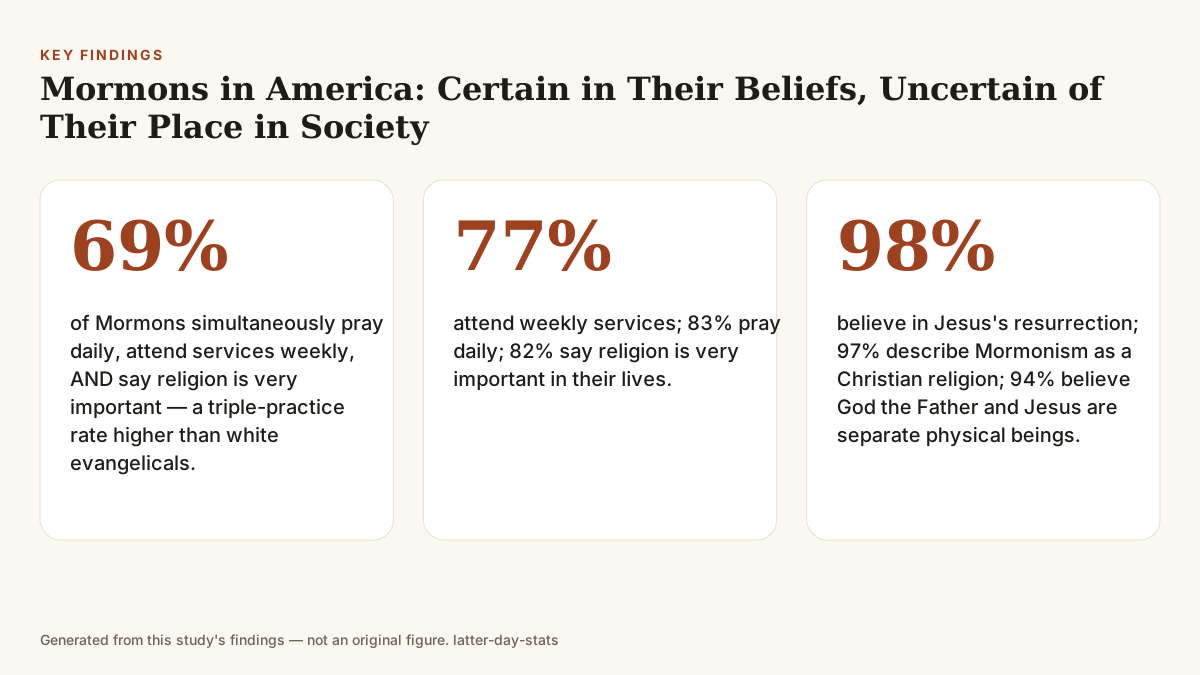
Mormons in America: Certain in Their Beliefs, Uncertain of Their Place in Society
Pew Research Center
The first comprehensive national survey of Latter-day Saints conducted by a non-LDS organization. Based on 1,019 Mormon respondents interviewed October–November 2011, the survey covers religious beliefs and practices, identity, family life, political attitudes, moral views, and perceptions of discrimination and public acceptance. Finds Latter-day Saints to be among the most religiously committed groups in America while also feeling broadly misunderstood and not accepted as mainstream by the wider public.
Read study →
- Primary Dataset2018TheologyEvangelicalism
The State of American Theology Study 2018
Ligonier Ministries, LifeWay Research
The State of American Theology Study 2018 is a survey commissioned by Ligonier Ministries and conducted by LifeWay Research to measure the theological understanding and beliefs of American adults. A demographically balanced online panel of 3,002 U.S. adults completed the survey between April 24 and May 4, 2018, answering agreement-scale questions on topics including the nature of God, the Trinity, Jesus Christ, the Holy Spirit, sin, the Bible, salvation, hell, and morality. Results were weighted to balance gender, age, ethnicity, income, region, and religion, and were further broken out by demographic and religious subgroups, including a standardized "Evangelical Beliefs" classification based on four core doctrinal statements.
Read study →
- Primary Dataset2025TheologySurvey Research
Ligonier State of Theology 2025
Ligonier Ministries, Lifeway Research
The State of Theology 2025 is a biennial survey commissioned by Ligonier Ministries and conducted by Lifeway Research to gauge American adults' beliefs on core Christian doctrines, including the nature of God, Jesus Christ, the Bible, sin, salvation, and morality. Data was collected from a demographically balanced online panel of 3,001 U.S. adults surveyed January 6-15, 2025, with results weighted to reflect the general population and analyzed for statistically significant differences across region, age, gender, education, income, religious tradition, and evangelical beliefs. Respondents rated their agreement with a series of statements on a four-point forced-choice scale (strongly agree, somewhat agree, somewhat disagree, strongly disagree), with an option to indicate they were not sure.
Read study →